

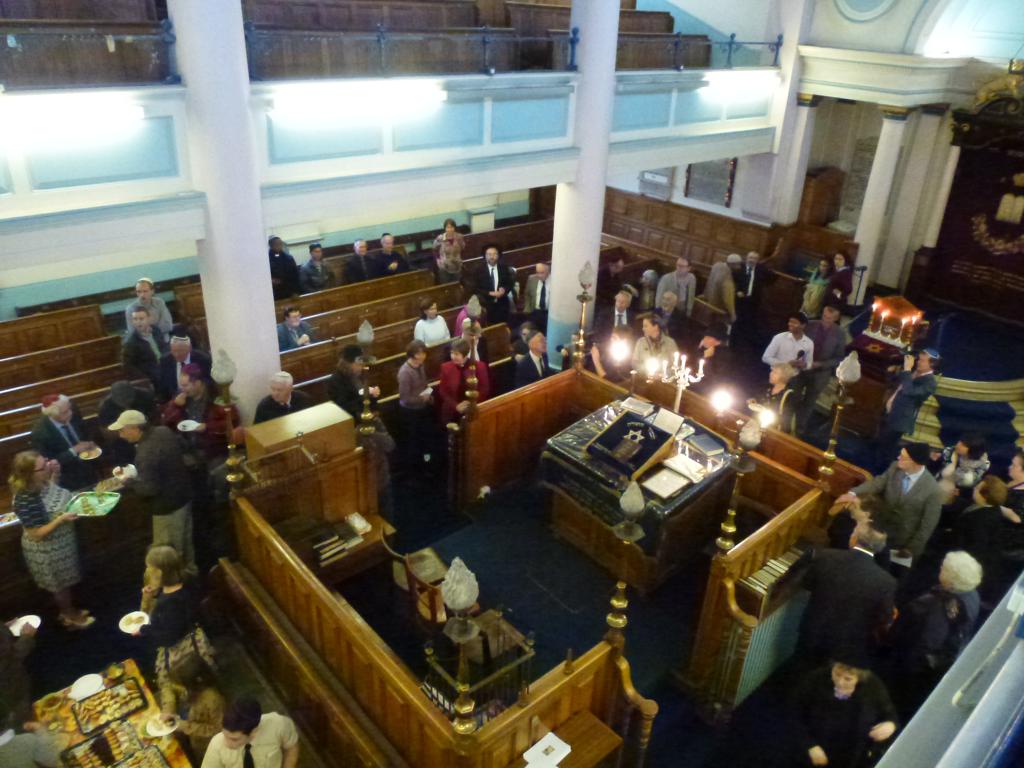
When papers reported that East London Central Synagogue’s (ELCS) building was the target of alleged arson, they struggled to name it.
Most, including the Slice, chose to name it a ‘former synagogue on Nelson Street’. The struggle with naming the synagogue is that, in many ways, it’s not really just one place of worship.
By the 21st century, the ELCS had become the collected relic of east London’s once-vast Jewish community. We see the vestiges of this once thriving community in the many disused Jewish cemeteries scattered around the borough: Ba’al Shem of London, the Novo Cemetery, Velho Cemetery, and Bancroft Road Cemetery.
The earliest foundations who would congregate into ELCS came with Oliver Cromwell.
Aside from a few hidden communities, significant Jewish immigration only came with Oliver Cromwell in the 1650s. When this morphed into something more like religious tolerance under the restored Charles II, the seeds of London’s Jewish community settled into the East End.
The heights of east London’s Jewish community began at the turn of the 20th century. London’s historic Jews had primarily come from Spain and Portugal via Amsterdam, where they had first settled after expulsion from Western Europe.
They were mainly middle-class and shared broadly similar cultural customs with their British neighbours.
From the 1880s, the Jewish population settling in the UK was from Eastern Europe and Russia. Fleeing brutal pogroms and persecution, this group was poorer, spoke primarily Yiddish, and practiced distinctly Eastern European religious customs.
This group settled around Spitalfields, Stepney and Whitechapel, collecting among its smaller, established Western European counterparts.
Because of its poverty, overcrowding, and culture of strict religious observance, this Ashkenazi Jewish group built a cultural home out of almost nothing.
Synagogues sprang up on street corners, often in converted warehouses or homes. Whitechapel Library became known as the University of the Ghetto, and both secular and religious Jewish organisations bloomed around the East End.
Jewish culture, newspapers, philosophers, and radicals flourished.
It was within this heyday that the East London Central Synagogue (ELCS) was built in 1923, its foundation stone laid on 19 August.
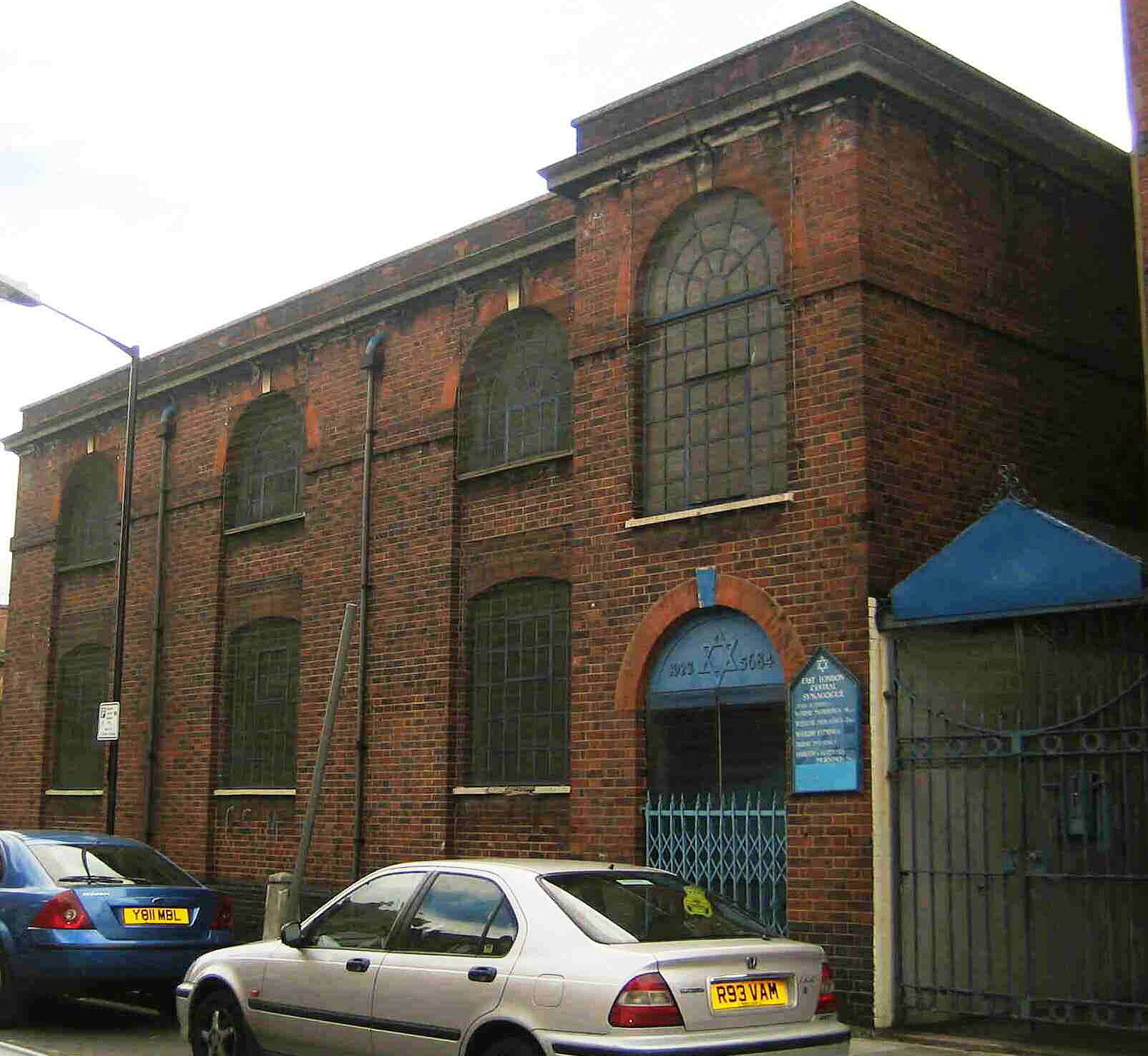
The foundation stone for the Nelson Street shul, known later as the East London Central Synagogue, was laid by B. Bernstein on 19 August 1923.
ELCS was an outlier among Tower Hamlets’ places of worship, most of which are ‘Russian dolls’ of switching religions, most famously the Brick Lane Mosque. ELCS, was purpose-built as a synagogue when the East End’s Jewish religious demand was outstripping its supply.
This changed with the Second World War, after which the East End was marred with craters and poverty.
Now established, the area’s Jewish population was increasingly middle-class and more culturally accepted. The post-war period saw an exodus to affluent North London and, by the 1970s, Bangladeshi emigrants became the most populous group in the borough.
ELCS, however, remained despite a thinning congregation. In fact, perhaps because it was purpose-built, the synagogue began to accommodate its dying neighbours. At least 14 east London synagogues amalgamated with ELCS; many are only remembered now via plaques on walls.
The red brick walls and arched windows of East London Central Synagogue, also known as Nelson Street shul, in Whitechapel, dates back to when it was built in 1923.
ELCS gradually became one of the final redoubts of the East End’s Jewish community. Leon Silver, whose family had contributed to ELCS in one way or another for several generations, became its president, helping to maintain it as an oasis for east London’s dwindling Jewish population.
Silver said that the remaining congregants were the few elderly Jews who had stuck to their childhood homes. Perhaps because it opened its doors to so many other disenfranchised worshippers, ELCS became a broad church for any Jews who needed somewhere to pray or just congregate.
‘In the main, they are East Enders. We don’t ask how they come because strictly speaking, you shouldn’t ride the bus on the Sabbath.’
The synagogues’ open arms extended beyond Judaism. Under Silver’s management, ELCS became east London’s Jewish base for outreach to Tower Hamlets’ Muslim population.
Silver joined the borough’s interfaith forum and regularly spoke at Iftars around Tower Hamlets. He said: ‘I feel as at home visiting East London Mosque/London Muslim Centre, Brick Lane Mosque and others as I do when I am visiting a synagogue.’
While Silver added that relations with Muslim neighbours had historically been strained around conflicts in the Middle East, and that their Rabbis had faced harassment, this community outreach was often returned, especially when the synagogue hit hard times.
A plaque remembering the six million Jews who died during the second world war, on the wall inside Nelson Street shul, also known as the East London Central Synagogue, in Whitechapel in the East End of London.
Silver began a long partnership with Tower Hamlets’ Muslim mayor, Lutfur Rahman, to try to save the synagogue after its roof was damaged. Over a decade, the pair developed plans to expand the synagogue into a museum and library celebrating the area’s cultural heritage.
Despite their best efforts, these plans never came to fruition. The latest developments suggest that ELCS will follow the ‘Russian doll’ path of so many east London places of worship.
The synagogue closed its doors during the Covid-19 Pandemic and, in February 2026, a Muslim group put down a deposit to convert the building into a mosque, community and education centre.
As of May 2026, the group is still asking for donations to fund its purchase and renovation of the Nelson Street site.
For his part, Silver never begrudged the transition of east London from a primarily Jewish to Muslim area, viewing the East End as an ‘enriching area, an area that’s always changing.’
His attitude fits a long pattern of solidarity among east London’s religious groups, who see more similarities than differences in their experiences.
Indeed, one of the first groups to condemn the attempted arson on the ELCS site was the Ashaadibi Muslim group who are trying to buy the site.
It said: ‘An attack on a house of worship is an attack on all of us.’
If the Ashaadibi group do manage to buy the synagogue, ELCS will gain its place among the evolutionary tradition of the East End, carried through Huguenot, Irish, Chinese, Caribbean, Jewish, Bangladeshi, and Somali migrants.
It may be that, with its demise, we are seeing the last flickering of east London’s Jewish community.
But it’s also another success story from Tower Hamlets, which has long served as the launching pad for immigrant groups from around the world to make London their home.
JEECS is grateful to the online newspaper Tower Hamlets Slice for permission to share this article.